When we arrived at our rental for a few days of respite, owner Graeme oriented us with a map he made. The homestead sits on a large wilderness block that we are keen to explore. Looking at the map made it seem manageable with trails that are marked and mown for us through the bush.
With what felt like painfully slow deliberation, Graeme walked us through how to read the map. Towards the end of his explanation, he said, “Now, do you see the white lines I marked on the map that lead to dots? Those are electric wires and poles. If you get lost, just look for the wires and you can follow them back to the homestead.”
Granted I’m not great with map reading and I lack a natural internal compass, but this seemed like obvious advice! I still had in mind the landscape of my suburban home where electric wires criss-cross along the streets, dipping down toward a multitude of houses, bringing what has becoming an essential service to neighbours everywhere.
During our first walk into the scrub, we managed to get disoriented and found it wasn’t as easy to spot an electric wire or post as I had imagined. Not only did the posts tower above the tall trees putting the wires themselves high up in the air against the sky, but the posts were (beautifully) few and far between.
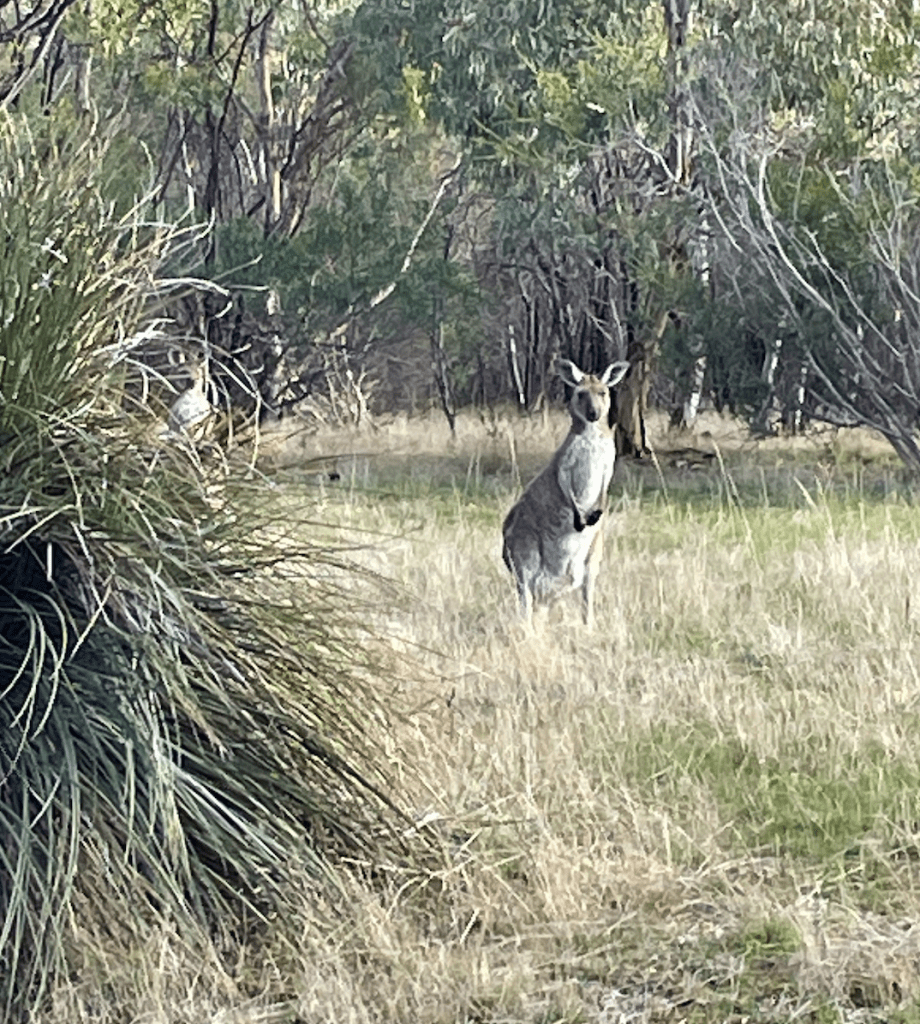
Standing under the slim electric wires, two words came to me as I took in the seemingly endless scrub, green grasses, tall trees, birds, roos, and sandy ant piles: proportion and scale. How wonderful to feel a smaller human footprint, to be amidst a more balanced ecosystem!
It is the feeling that comes over us when we encounter a vast horizon, stand on the ridge of a mountain or stare into the night sky in the outback. Some say they come to recognise their smallness, and this may be in part the experience. But what I valued that day and at other times is the sense of proportion and scale–the awareness that I am part of the whole, important but not everything, gloriously interconnected.
 The Quiet Centre